Breathing: Pilates moves for Early Postpartum that you can do with Baby

POSTNATAL

One of the best exercises to start post baby is breathing. This sets the stage for restoring the core, connecting to the mind and treating our bodies with love, grace and care it deserves. You can start breathing straight away! Diaphragmatic breathing involves taking deep breaths into the belly, which can help promote relaxation, reduce stress, and improve core strength.The answer to postpartum recovery may be how you breathe… Just breathe, mumma. x

Why Chair Tricep Dips Are the Perfect At-Home Arm Workout

Your at-home arm workout that doubles as a posture reset.

Feeling slouchy? This simple chair move will wake up your arms, open your chest, and remind your body what good posture actually feels like.

How to do it:

1. Sit tall on the edge of a sturdy chair with feet hip-width apart.

2. Place your hands on the edge of the seat beside your hips, fingers pointing forward.

3. Press through your hands, lift your chest, and scoot your hips slightly forward so they hover just off the chair.

4. Hold here, drawing your shoulders back and keeping your core gently engaged.
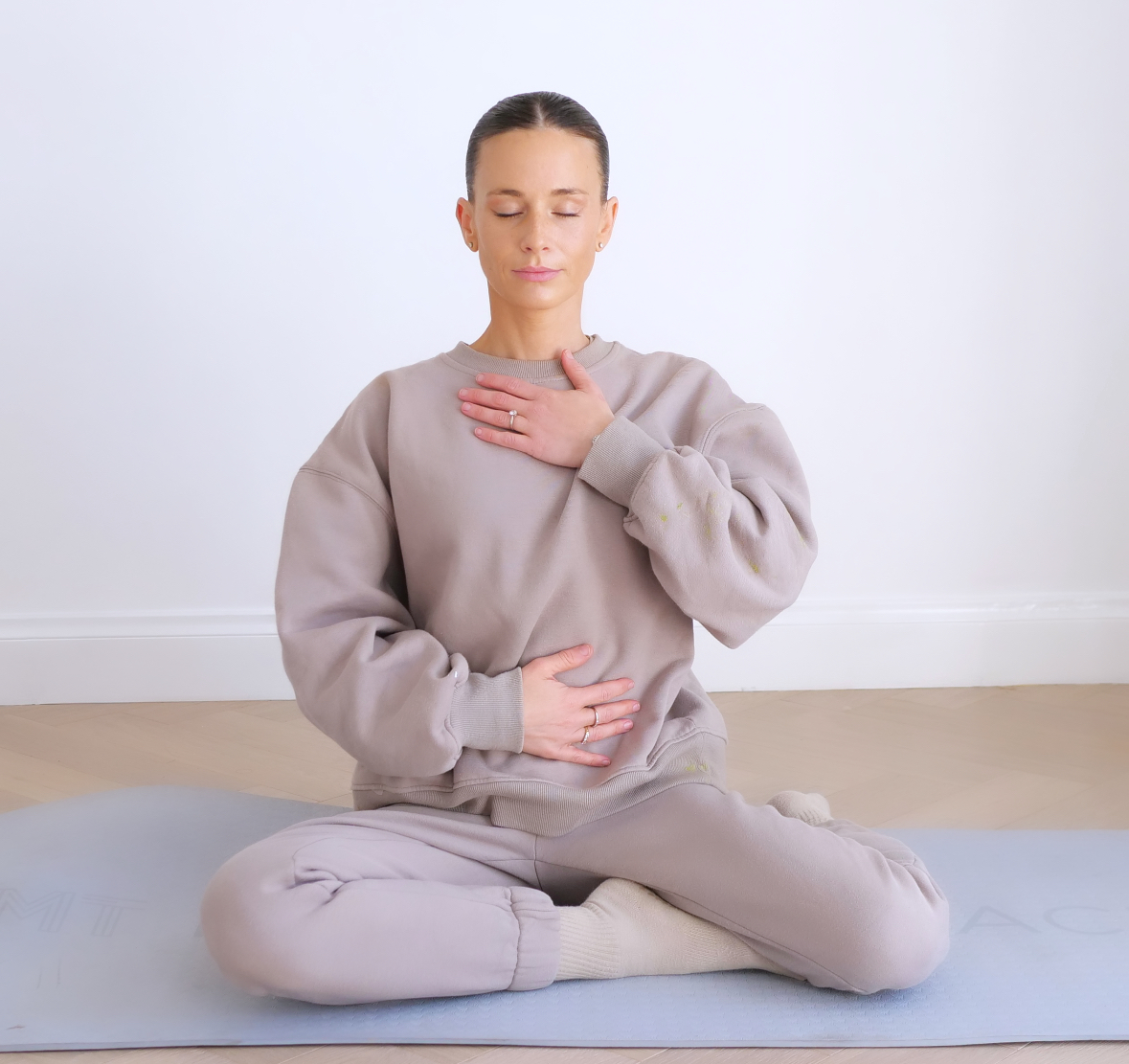
Place one hand to your chest and the other hand to your lower belly.

Why it works:

This is a sneaky multitasker. You’ll get strength through your arms and shoulders (hello, triceps), plus a juicy opening through the chest and front of the hips. It’s also pregnancy- and postpartum-safe — no lying flat, just pure, supported strength and stretch.

Do it when: you need to counteract desk posture, prep your body for more upper-body work, or just feel instantly taller.

Full Workout:

CORE RECOVERY: Connect with your breath, activate your deep transverse abdominal and rebuild your core.

TIP: Placing one hand onto your belly and one on your upper chest is helpful feedback. You want your belly to rise on your inhale (not your chest).

Does your chest want to rise? This is a common compensatory breathing pattern we fall into when stressed. It’s contributes to shoulder and neck stiffness. It’s good to circle back to this throughout your days and notice when you start to breathe into the accessory muscles.

BREATHING 101

What is Belly Breathing?

Diaphragmatic breathing, also known as belly breathing, is a technique where you breathe deeply using your diaphragm—the dome-shaped muscle under your lungs—rather than taking shallow breaths using your chest. This style of breathing encourages a full exchange of oxygen, which calms your nervous system and supports the body’s natural relaxation response.

How to correctly breathe?

Diaphragmatic breathing can be performed in any position, but it is easiest to practice while lying on your back with knees bent. Start by placing one hand on your abdomen and the other hand on your chest.

Place one hand to your chest and the other hand to your lower belly.


1.
Take a slow, deep breath in through your nose. As you inhale, allow your belly to expand out against your hand.

2. Exhale slowly through your mouth, letting the air out all the way. As you exhale, feel your belly slowly return.

3. Continue this pattern, inhaling through your nose and exhaling through your mouth. Take your time with each breath, and let your belly rise and fall. Aim for a slow and steady rhythm at a pace that feels comfortable to you. Usually 2-3 seconds on the inhale and 4 seconds on the exhale feels good.

Example:

CORE RECOVERY: Connect with your breath, activate your deep transverse abdominal and rebuild your core.

TIP: Placing one hand onto your belly and one on your upper chest is helpful feedback. You want your belly to rise on your inhale (not your chest).

Does your chest want to rise? This is a common compensatory breathing pattern we fall into when stressed. It’s contributes to shoulder and neck stiffness. It’s good to circle back to this throughout your days and notice when you start to breathe into the accessory muscles.

PRACTISE

Breathing Exercises for Early Postpartum

You’ve learned why breathing matters for postpartum recovery — now let’s put it into practice with two simple, safe, and effective techniques you can start today.
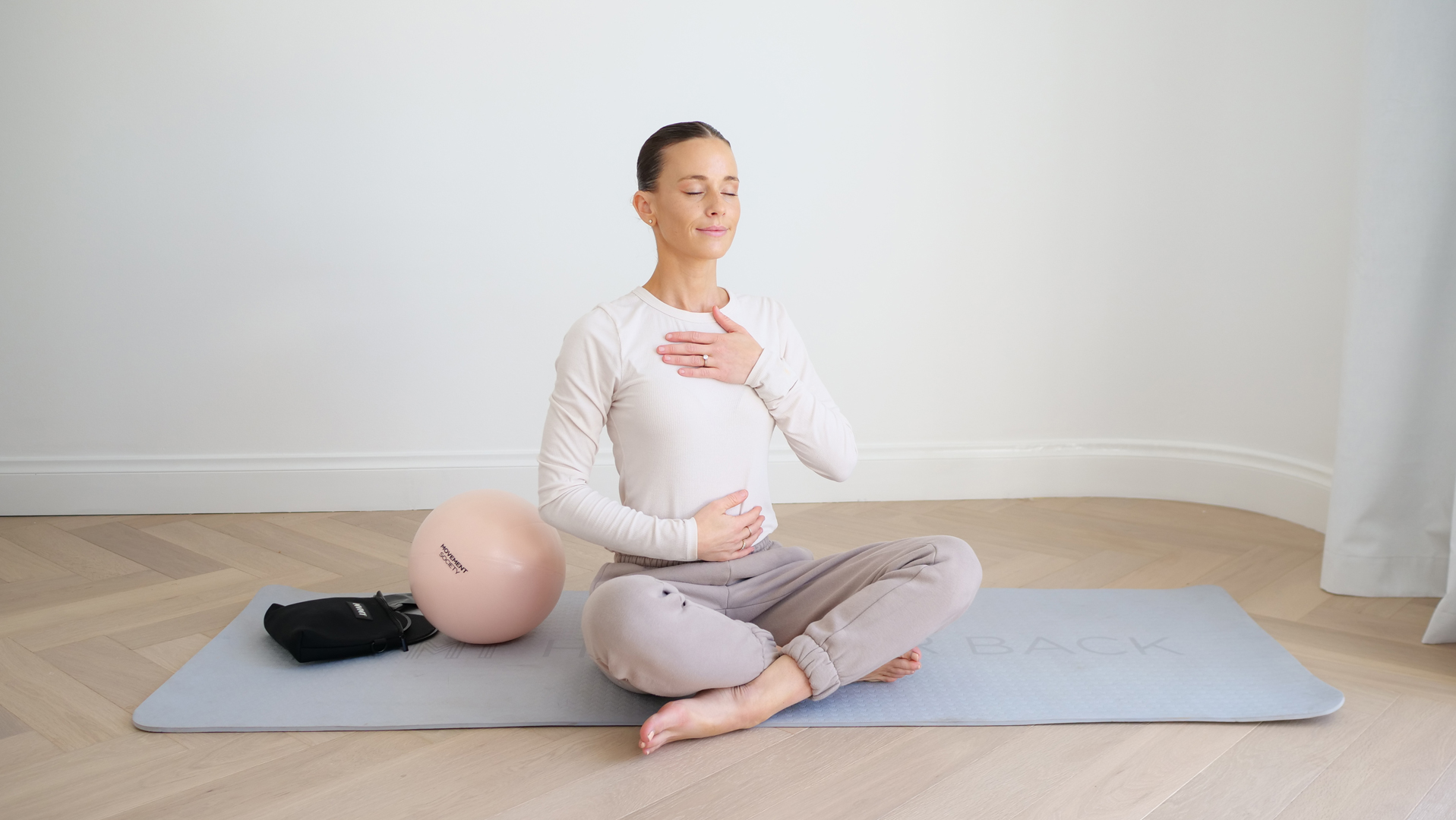
Breathing Exercise 1: Box Breathing (For Calm + Reset)

Let’s start with one of the simplest postpartum breathing techniques: Box Breathing. It’s a calm, structured way to slow your breath, relax your body, and give your mind a mini reset in the middle of newborn life.

Perfect for: Calming nerves, lowering stress, and helping your body shift out of “fight or flight” mode.

This simple technique helps reduce stress, ground you, and activate your parasympathetic nervous system — the one that tells your body “you’re safe, you can relax now.

How to Do It:

🫁 Inhale → 4 counts
⏸️ Hold → 4 counts
😮‍💨 Exhale → 4 counts
⏸️ Hold → 4 counts

Aim for 4 Cycles

When to Use It:

  • Before bed
  • After settling baby
  • Anytime you feel overwhelmed or stressed

💛 Mum-Life Tip: Try this before bed, after settling baby, or whenever you feel overwhelmed. It’s like a mental pause button.

Breathing Exercise 2: Diaphragmatic Breathing (For Core Connection)

Once you’ve tried Box Breathing, you can move on to Diaphragmatic Breathing — also known as belly breathing. This one’s all about reconnecting with your deep core and pelvic floor while helping your body shift into full rest-and-repair mode.

How to Do It:

🫁 Inhale through your nose (2–3 seconds) — belly rises, chest stays still
😮‍💨 Exhale through your mouth (4 seconds) — belly softens and falls

Aim for 5-10 cycles

When to Use It:

  • Before or after a feed
  • While waiting for the kettle to boil
  • Lying next to bub during tummy time
  • Before bed/ first wake up
  • Anytime you feel tense, anxious, or overwhelmed

💛 Mum-Life Tip: Aim for around 10 breaths each time — it’s just enough to feel your body soften without needing to watch the clock. Think of this as your all-day reset — from feeding to nappy changes, it’s a small way to recharge your body and mind.

EXERCISES

BREATHING EXERCISE 1:

Try “Box Breathing” for stress reduction, grounding and activating the parasympathetic nervous system. “Box Breathing” consists of the same number of counts during your inhale as your exhale with an added pause at the peak of the inhale and valley of the exhale.

  • Inhale for Four Counts – 1,2,3,4
  • Pause for Four Counts – 1,2,3,4
  • Exhale for Four Counts – 1,2,3,4
  • Pause for Four Counts – 1,2,3,4
  • Repeat this cycle 4 times

🤍 This rhythmic breathing practice can help activate your parasympathetic nervous system (the one that makes you feel calm).

BREATHING EXERCISE 2:

Use “Diaphragmatic breathing” throughout your day.

  • 10 breath Cycles before bed
  • 10 breath cycles in the morning
  • When baby cries
  • When you feel overwhelmed

🤍 Adding deep breathing to your daily routines may improve your physical, mental and emotional health, help activate your parasympathetic nervous system (the one that makes you feel calm).

BENEFITS of breathing

Why Diaphragmatic Breathing Is Key to Postpartum Recovery

Diaphragmatic breathing, or deep belly breathing, is a gentle yet powerful technique that helps restore strength, reduce stress, and promote healing in a way that honours what your body has been through. Here’s why it’s such a game-changer for postpartum recovery:

  • Reduce pain, Improve Posture: The breath helps release tension in the shoulders, neck, and upper back, where many new mothers hold stress. This can help improve posture, which may have been affected by the physical demands of pregnancy and carrying a baby.

  • Rebuilds Core & Pelvic Floor Strength: Pregnancy and birth can stretch and weaken the core and pelvic floor muscles, and jumping into heavy exercise too soon can lead to strain or injury. Diaphragmatic breathing is a safe way to reconnect with these muscles, gently activating and strengthening them with each breath.

  • Improve Sleep and Boosts Energy: Diaphragmatic breathing can improve sleep quality by calming the nervous system, helping you get deeper rest even if sleep is broken. Better sleep supports faster healing, lifts your mood, and gives you more energy to take on each day.
  • Promotes Blood Flow and Healing: Deep breathing improves circulation and helps deliver oxygen and nutrients to healing tissues. It also supports lymphatic drainage, reducing swelling and helping the body remove toxins—crucial for postpartum recovery.
  • Relieves Stress and Anxiety: The postpartum period can feel overwhelming, and diaphragmatic breathing activates the body’s relaxation response, lowering stress hormones and easing anxiety. This breathing technique helps you stay calm, centered, and better able to navigate the rollercoaster of new motherhood.
  • Simple Technique, Start Anytime: One of the best things about diaphragmatic breathing is that it’s easy to start right away, even in the early postpartum days (with your provider’s approval). You don’t need equipment or a workout space—just a few quiet moments to connect with your breath and body.

The answer to postpartum recovery may be how you breathe—here’s how to do diaphragmatic breathing. Correct breathing lays the foundation for healing and restrengthening your inner core. With breath, you begin the healing process postpartum by simultaneously rehabbing both the deep core and the pelvic floor.

QUALIFICATIONS
Pilates Education & Qualifications.

Elise Barlow holds a Diploma of Pilates Comprehensive Instruction (Polestar, 2014) and a Certificate in Pilates Matwork Instruction (Polestar, 2014). With 10+ years of teaching experience, she is a Polestar Mentor, selected to train and support future instructors. Elise is also certified in Prenatal and Postnatal Pilates.

Elise Barlow is a Polestar-certified Pilates instructor, mentor, and educator with over 10 years’ experience, specialising in prenatal and postnatal movement.

  • Diploma of Pilates Comprehensive Instruction Method (11292NAT) Polestar Pilates, 2014 600+ hours training: Matwork (295h), Comprehensive Studio/Rehab (500h), Academic Units (358h). Nationally accredited in Australia · AQF Level 5 · Internationally certified.

  • Polestar Mentor (Teacher Trainer: Selected by Polestar educators to guide and shape future instructors.

  • Certificate in Pilates Matwork Instruction- Polestar Pilates, 2014

  • Certified in Prenatal & Postnatal Pilates

WHY I CREATED GLOW?

I created Glow in 20 because I know what it’s like to be busy and stretched thin, yet still crave movement that feels good and delivers results. With my 10+ years as a Pilates instructor and the lived wisdom of motherhood, I’ve shaped a program that’s short, achievable, and effective — so you can show up for yourself, even on the busiest days.

Movement that fits real life and leaves you glowing long after you leave the mat. x

POSTNATAL PROGRAM

the first six weeks

A safe, low-impact way for new mums to gradually ease back into exercise.

This 6-week program will ease you back into gentle movement once you feel ready to move post-birth. It will introduce gentle movement and restorative stretches designed to support and help you navigate early postpartum.

Suitable for: Early postpartum recovery

postnatal tips

TIP 1

Be kind to yourself and give your body the gracing time it deserves. Number 1.

TIP 2

It sounds obvious but prioritise yourself! It is so easy for self-care or me time to slip to the bottom of the list (looking after a tiny human is 24/7). For me, that meant carving out 10-15 minutes daily as soon as Bub was down. It has to be a non-negotiable even if it is as short as 5-10 minutes.

TIP 3

Shift the narrative from ANYTHING related to how you want your body to look and reframe it to what your body be able to do and how you can actually take some control of that. For me – loosing control of everything was hard. I liked that I could commit to 10-15 minutes daily for 30 days. I loved that each session on the mat made me feel closer and stronger.

TIP 4

Choose workouts that are achievable and convenient. E.g. Short (5-15 minute workouts) that you can do from home while bub sleeps.

TIP 5

Play the long game!

JOIN US MUMMAS

elise barlow

Internationally Certified Pilates Instructor
with 10+ Years of Experience

I’m Elise Barlow, a Perth Pilates instructor and Polestar-certified educator with more than a decade of teaching experience. I specialise in Mat Pilates, Prenatal Pilates, and Postnatal Pilates, helping women move with strength and confidence at every stage of life. Beyond my qualifications, my deepest learning has come from lived experience – navigating two pregnancies and recoveries, and juggling that with running a business and being a busy mum. Finding a solution and giving mums the guidance and support they deserve has been my driving force to create the most comprehensive pre and postnatal programs and offerings. Knowing I can empower and support thousands of women (especially mums) with a proven method worldwide through each stage of motherhood fills my heart.

Pilates Qualifications

Diploma of Pilates Comprehensive Instruction Method (11292NAT)
Polestar Pilates, 2014

Certificate in Pilates Matwork Instruction
Polestar Pilates, 2014

Polestar Pilates Mentor

Since 2014, I’ve been a Polestar Pilates Mentor, selected to guide and support future instructors. With 10+ years of teaching experience, I continue to mentor the next generation while leading a global community of women through my online platform.

Former High Performance Springboard & Platform Diver

I’m a former Elite Springboard and Platform Diver. Starting at age 11, I trained 11x week (4-5 hours a day) for almost 10 years; it is fair to say I’ve been dedicated to movement from an early age. Some moments that I am proud of:

– First-ever individual WAIS scholarship holder for Diving (it took 2 years for anyone else in the sport of diving to pick up sponsorship, and paved the way to diving, being part of WAIS. I felt incredibly honoured to have my talent recognised).
– Winning Silver at my first international Competition in Germany at age 14.
– Junior sports women of the year (twice)
– Winning my first ever nationals at age 14. Being the best in your country in a sport like Diving is pretty special.
– Gold with my bestie, Sharleen Stratton (and 2-time Olympian) for 3-meter Syncro after training together twice.
– My resilience, determination and grit to show up every day.
– Throwing myself off the 10 meter -it is scary!

Elise Barlow – Control Balance